
★Monchhichi★
Birth of a Legend: The Spark of an Idea
How a chance encounter in Germany inspired a Japanese craftsman — and ended up producing a character the whole world fell for.
Inspired in Germany, Perfected in Japan
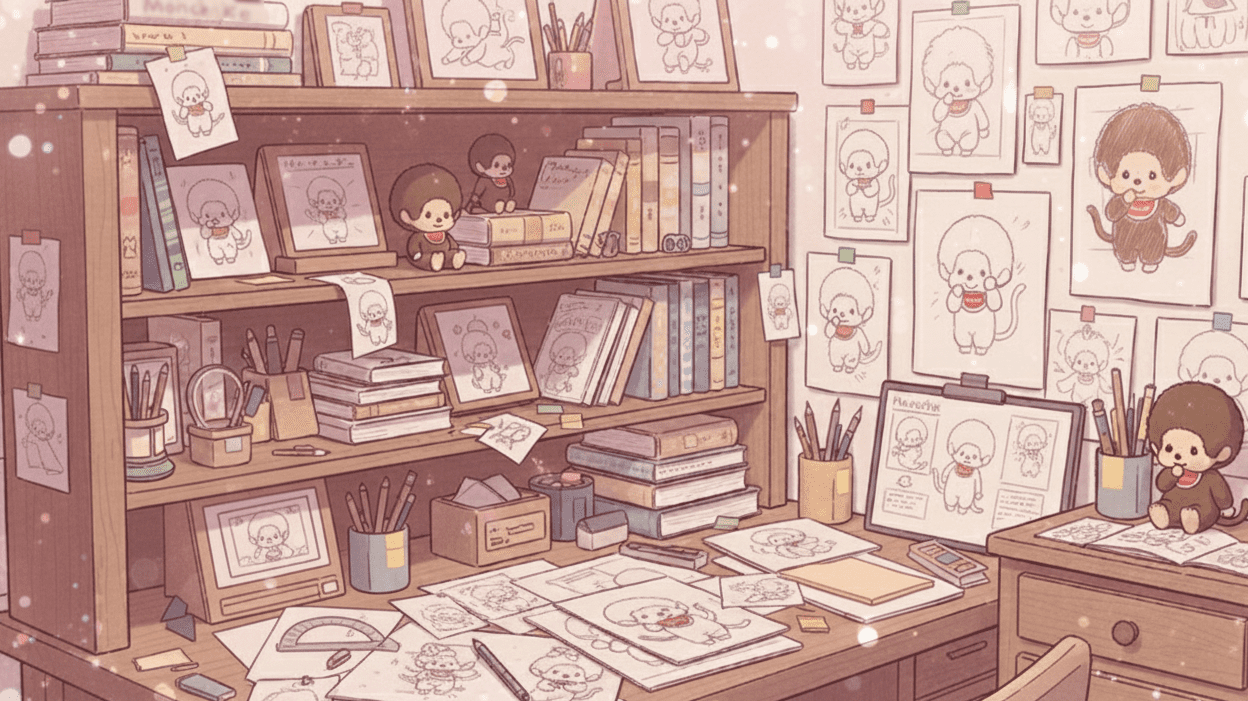
The Sekiguchi background: founded in 1918, with deep roots in toy manufacturing.
The spark: in the early 1970s, founder Koichi Sekiguchi was captivated by a German doll called “Mademoiselle GeGe”.
An evolution, not a blank sheet: Monchhichi was built on “Kuta Kuta Monkey”, already a hit in Japan.
The core idea: a cross-cultural creation marrying European aesthetics to proven Japanese commercial instincts.
The Monchhichi story does not begin in a Japanese design studio. It begins with an encounter across a cultural border. The company behind it was Sekiguchi (株式会社セキグチ), founded in Japan in 1918. Sekiguchi started life as a wholesaler of kimono fabric before moving into toys, working first in celluloid dolls and then, after the war, in the newly imported soft vinyl. Along the way it accumulated a deep well of manufacturing know-how and market instinct — the foundation on which its later innovation would rest.
The turning point came in the early 1970s. On a trip through the German market, company founder Koichi Sekiguchi was struck by a charming little girl doll called “Mademoiselle GeGe”. It was not only that she looked appealing; it was that she could hold her own thumb in her mouth. That single detail lit the fuse. The chance meeting planted the seed of an entirely new product in Sekiguchi’s mind and set the style and direction Monchhichi would follow.
Monchhichi, though, was no bolt from the blue. It was a shrewd piece of evolution. Before it appeared, Sekiguchi had already launched a monkey doll called “Kuta Kuta Monkey” (くたくたモンキー, roughly “the worn-out monkey”), which had done very well in Japan. The idea behind Monchhichi was to take the much-loved monkey theme of Kuta Kuta Monkey and marry it to the humanised features and thumb-sucking pose of the German GeGe doll — an improved version, or a little brother, depending on how you look at it. It was a canny commercial strategy: innovate on top of something the market has already validated, rather than gamble on starting from nothing.
Taken together, these developments reveal a rather fascinating global feedback loop running through the toy industry of the 1970s. Monchhichi was, in essence, a Japanese manufacturer’s close reading and reinvention of a European aesthetic. Sekiguchi observed a European trend, fused it with elements that had already proved themselves at home, and produced a hybrid. That carefully polished product was then successfully re-exported, in 1975, to the very country that had inspired it — where it went on to enjoy even greater success than in Japan. The episode says a great deal about Sekiguchi’s feel for international taste, and it gave Monchhichi a border-crossing cultural DNA from the very beginning.
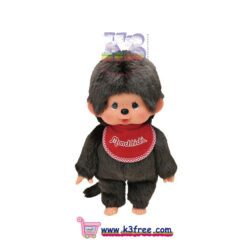
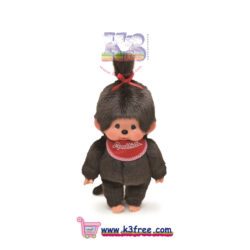
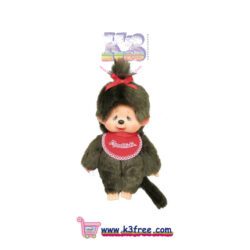
Buyer’s Guide: Spotting a Genuine Monchhichi, What It Costs and Where to Buy
Every Monchhichi at K3 Shop is imported from Japan and is 100% genuine Sekiguchi merchandise.
How Do You Tell a Genuine Monchhichi from a Fake?
| Feature | Genuine | Common giveaways of a fake |
|---|---|---|
| Freckles | Four or five under each eye, three across the bridge of the nose | Wrong number, set too low, or no freckles on the nose at all |
| Face, hands and feet | Soft vinyl with a gentle spring to it | Cheap rigid plastic that feels hard and unyielding |
| Soles of the feet | Later Basic Edition dolls in size S and above carry an embossed “Monchhichi” or “Sekiguchi” stamp | Stamp missing, or the lettering is crooked |
| Body tag | Fabric tag carrying the full product information | Tag missing, or the typeface and colours are wrong |
| Eyes (for dating) | Blue = before 1985; brown = after 1985 | — |
Want to learn how to tell the Sekiguchi and Mattel eras apart from the foot stamp, or what the tag lettering should look like? Read The Monchhichi Collector’s Handbook: A Complete Guide to Authentication and Dating.
How Much Does a Monchhichi Cost?
| Basic Edition (standard / large) | Around HK$158–458 |
|---|---|
| Animal Costume series | Around HK$278 |
| Crossover collaborations (Hello Kitty, Heidi and others) | Around HK$208–328 |
| Bebichhichi series | Around HK$128–208 |
| Seasonal and holiday limited editions | Around HK$158–268 |
Prices shown on the product page always take precedence. Browse the full Monchhichi range at K3 Shop.
Where Can You Buy a Genuine Monchhichi?
Order online: place your order directly in the Monchhichi section — free delivery on orders over HK$380.
WhatsApp enquiries: Monday to Friday, 15:30–20:00 (closed at weekends)
WhatsApp UsReturns and exchanges: if an item has a fault or does not match its stated specification, please request an exchange within seven days of the delivery date. See the K3 Shop returns and refunds policy.
From its birth in 1974 to its undimmed popularity in 2026 — the full fifty-year timeline is set out in The Complete Monchhichi Story: Fifty Years of a Legend.
Prices are those shown on the K3 Shop product pages.
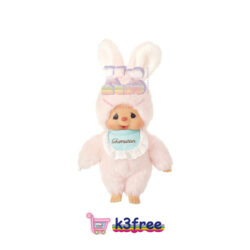
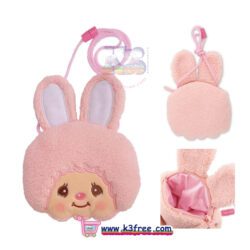
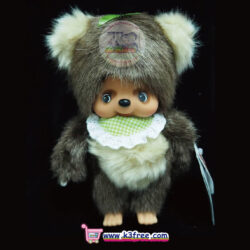
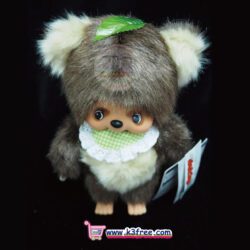
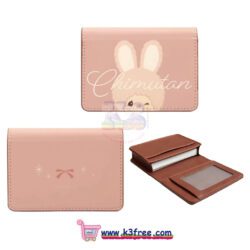
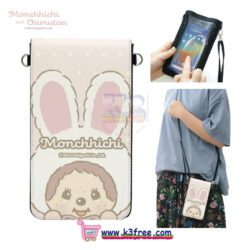
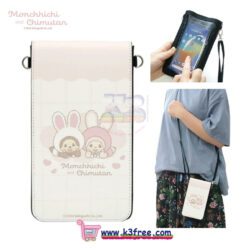
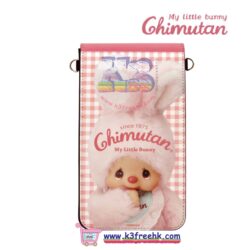
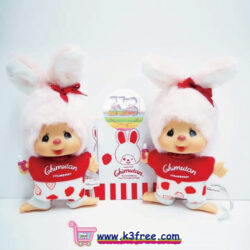
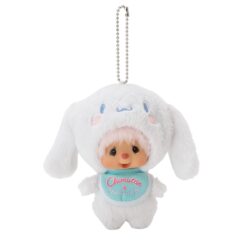
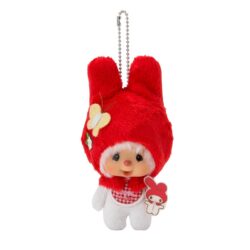
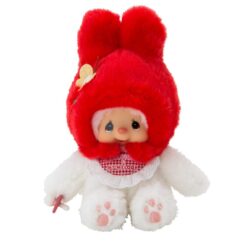
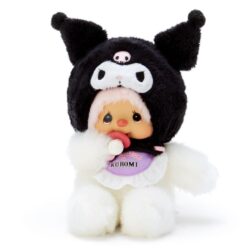
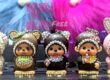
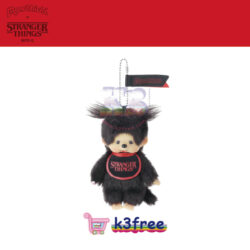
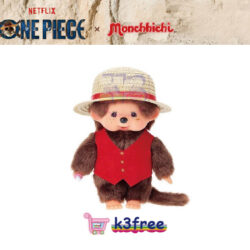
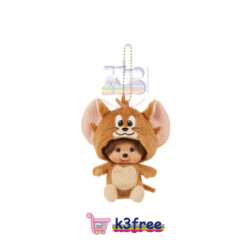
The crossover collaboration dolls mentioned above:
Shaping a Distinctive Identity
“Mine” and “Suckling”: More Than Simply Cute
A revolutionary design: a warm plush body combined with an expressive vinyl face, hands and feet.
The art of the name: mon (French: “my”) | chichi (Japanese: the sound of a baby suckling) | and it sounds like “monkey” in English.
A serious philosophy: an emissary of friendship, love and happiness.
What the thumb-sucking means: it speaks to the loneliness of 1970s Japanese children whose parents were consumed by work.
The Monchhichi blueprint was, for its day, a genuine departure. At its heart lay the decision to combine a soft plush body with a face, hands and feet moulded in vinyl. Blending the characteristics of a doll with those of a soft toy was revolutionary at the time: it kept the warmth and huggability of plush while adding the lifelike expression and detail of a doll, making it far easier for children to invest emotionally in the character.
The name itself — “Monchhichi” (モンチッチ) — is a small masterpiece of linguistic design. It is a portmanteau blending the French mon (“my”) with chichi (チュウチュウ), the Japanese sound for a baby sucking on a dummy, and it happens to sound rather like the English word “monkey” too. Cute and memorable, it also reveals the multilingual commercial foresight built into the design from the outset, hinting at the global journey ahead.
Beneath the appealing exterior, Monchhichi carried a considered philosophy. Sekiguchi set out to create a character that would carry a message of friendship, love and happiness to people of every age, and to children above all. It was conceived as a gift capable of inspiring respect and affection.
And its single most distinctive feature — the thumb-sucking pose — holds a deeper social observation. Koichi Sekiguchi once explained that the design was never simply about mimicking the sweetness of a baby. Against the backdrop of Japan’s rapid economic growth in the 1970s, many parents were consumed by work and had little time for their children, who were left feeling lonely and adrift. Thumb-sucking is the very emblem of that need for comfort and self-soothing. The detail gave Monchhichi an emotional depth well beyond that of an ordinary toy. It was no longer merely a doll but a companion that resonated, a design that reached directly into the domestic anxieties of Japanese society and the real emotional needs of its children. By building a symbol of childhood vulnerability into the product, Sekiguchi gave Monchhichi a soul — a back story onto which children could project their own feelings, and which perhaps gave their parents pause too. It made for an emotionally powerful product indeed.
The Beginning of an Era
1974: The Twins Arrive
Date of birth: 26 January 1974, in Katsushika, Tokyo.
First-generation features: launched as twins, one boy and one girl, with clear blue eyes, sucking their own thumbs (not a dummy), and wearing nothing but a bib.
The reception: an explosive craze in Japan, and almost overnight a phenomenon.
Monchhichi’s official birthday is 26 January 1974, and its birthplace Katsushika ward in Tokyo. Notably, what went on sale was not a single doll but a pair of twins: the boy Monchhichi-kun (モンチッチくん) and the girl Monchhichi-chan (モンチッチちゃん). Some accounts go further, noting that the twins wore different expressions — one laughing, one crying — which only added to the storytelling and the emotional pull.
The first-generation Monchhichi of 1974 had several unmistakable features. They had a pair of clear blue eyes; they could put their own thumbs (rather than the later dummy) into their mouths; and the only thing they wore was a simple bib.
The reaction in Japan was explosive. In an age before the internet, its popularity spread entirely by word of mouth, and it rapidly became a phenomenon. That success owed something to the inventiveness of the design and the emotional idea at its centre — but it also chimed perfectly with a collective longing in Japanese society at the time for warmth, companionship and comfort. From the day they were born, this pair of little monkeys were destined for a remarkable journey.