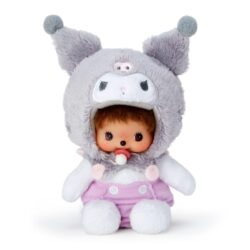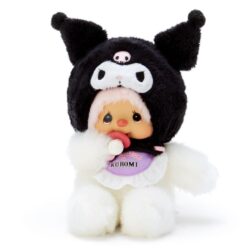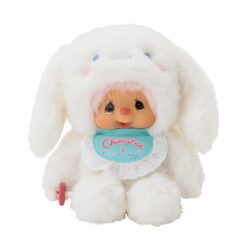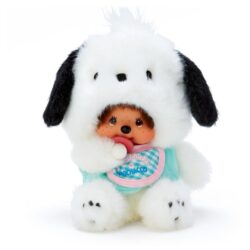

★Monchhichi★
The Global Monchhichi Craze
From Tokyo to the rest of the world — how one small monkey crossed every border and set off a whirlwind of cuteness.
Monchhichi’s First Wave of Expansion
From Tokyo to the World
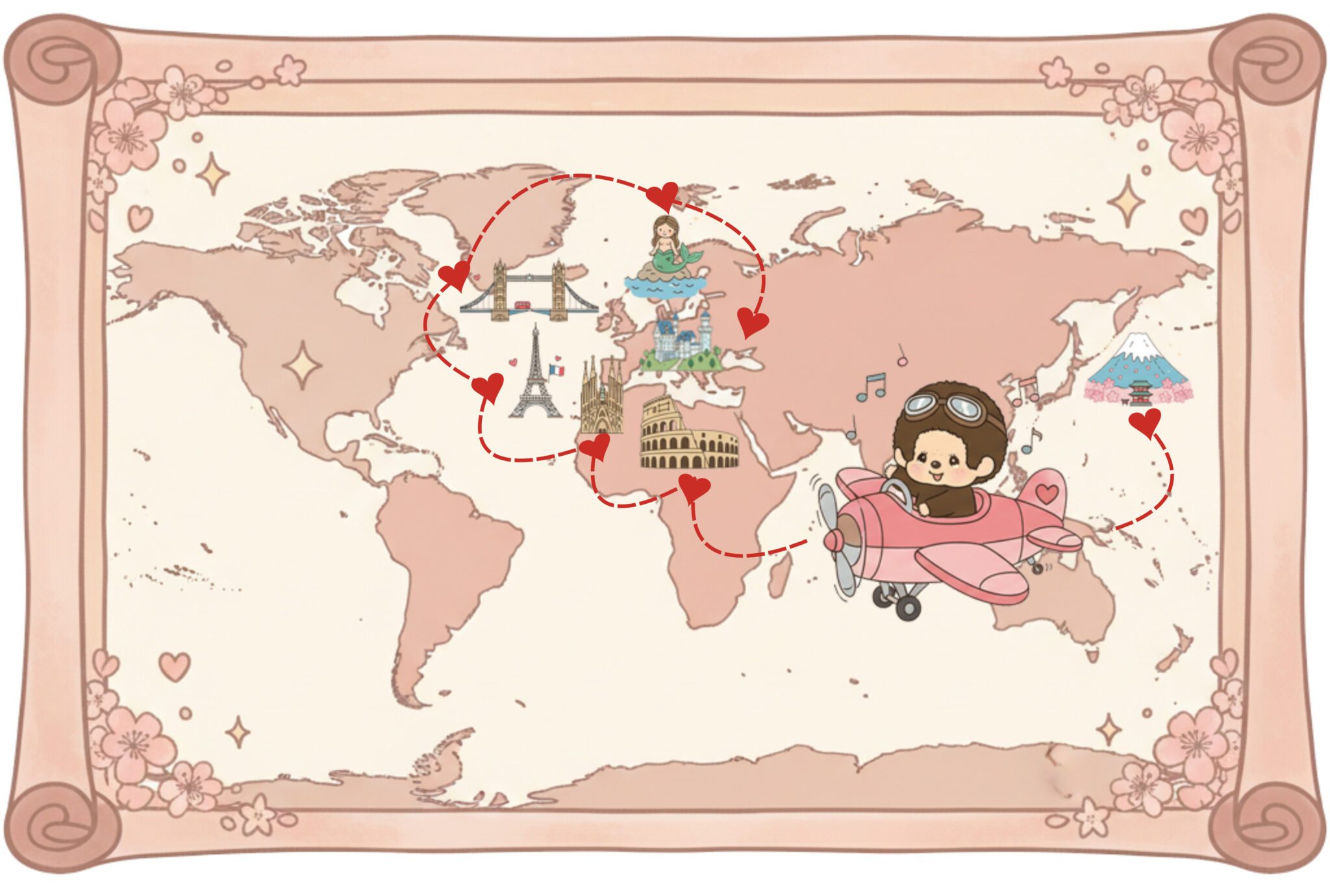
1975: the first move abroad, landing in Germany and Austria.
The key figure: an Austrian distributor who spotted its potential at the Nuremberg Toy Fair.
1977–1978: expansion into the Benelux countries, Scandinavia and beyond, building a solid European base.
After its runaway success at home, Sekiguchi quickly turned its attention overseas. In 1975, only a year after Monchhichi was born, the global campaign began — and the first stop was Europe: Germany and Austria. That crucial first step was brokered by an Austrian sales agent who spotted Monchhichi’s enormous potential at the famous Nuremberg Toy Fair (Spielwarenmesse) and introduced it to a string of German companies, laying the groundwork for its success across the German-speaking world.
Having established itself in Germany and Austria, Monchhichi kept moving. Between 1977 and 1978 its footprint spread steadily across continental Europe, taking in the Benelux countries and Scandinavia. By the time it reached North America, that patient market-building had already given Monchhichi a devoted European following and a name people recognised.
Buyer’s Guide: Spotting a Genuine Monchhichi, What It Costs and Where to Buy
Every Monchhichi at K3 Shop is imported from Japan and is 100% genuine Sekiguchi merchandise.
How Do You Tell a Genuine Monchhichi from a Fake?
| Feature | Genuine | Common giveaways of a fake |
|---|---|---|
| Freckles | Four or five under each eye, three across the bridge of the nose | Wrong number, set too low, or no freckles on the nose at all |
| Face, hands and feet | Soft vinyl with a gentle spring to it | Cheap rigid plastic that feels hard and unyielding |
| Soles of the feet | Later Basic Edition dolls in size S and above carry an embossed “Monchhichi” or “Sekiguchi” stamp | Stamp missing, or the lettering is crooked |
| Body tag | Fabric tag carrying the full product information | Tag missing, or the typeface and colours are wrong |
| Eyes (for dating) | Blue = before 1985; brown = after 1985 | — |
Want to learn how to tell the Sekiguchi and Mattel eras apart from the foot stamp, or what the tag lettering should look like? Read The Monchhichi Collector’s Handbook: A Complete Guide to Authentication and Dating.
How Much Does a Monchhichi Cost?
| Basic Edition (standard / large) | Around HK$158–458 |
|---|---|
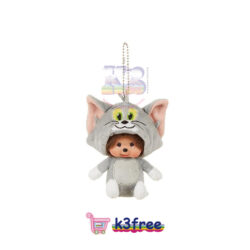
| Animal Costume series | Around HK$278 |
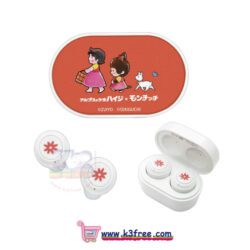
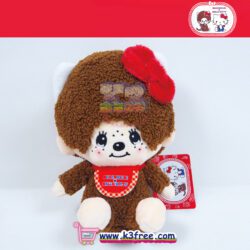
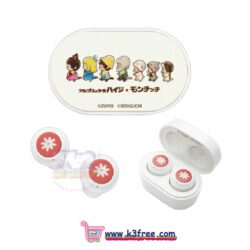
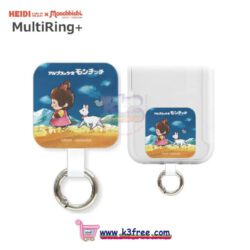
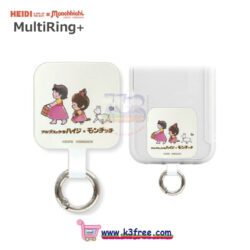
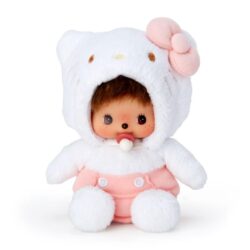
| Crossover collaborations (Hello Kitty, Heidi and others) | Around HK$208–328 |
| Bebichhichi series | Around HK$128–208 |
| Seasonal and holiday limited editions | Around HK$158–268 |
Prices shown on the product page always take precedence. Browse the full Monchhichi range at K3 Shop.
Where Can You Buy a Genuine Monchhichi?
Order online: place your order directly in the Monchhichi section — free delivery on orders over HK$380.
WhatsApp enquiries: Monday to Friday, 15:30–20:00 (closed at weekends)
WhatsApp UsReturns and exchanges: if an item has a fault or does not match its stated specification, please request an exchange within seven days of the delivery date. See the K3 Shop returns and refunds policy.
Curious about how the Monchhichi family came together, and when they married and had children? Read Monchhichi: The Birth and Rebirth of a Global Icon.
Prices are those shown on the K3 Shop product pages.
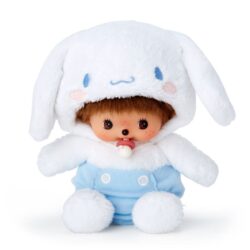
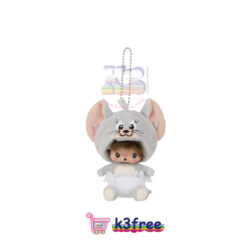
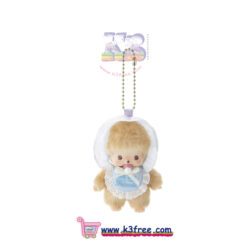
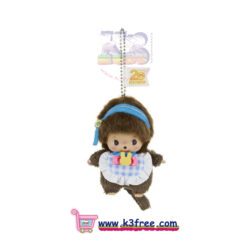
The Bebichhichi series mentioned above:
Many Names, One Monkey
Kiki, Chicaboo, Bølle… A Study in Localisation
France: Kiki
United Kingdom: Chicaboo
Italy: Mon Cicci
Denmark: Bølle
2013: the brand name is unified worldwide as “Monchhichi”.
One of the most entertaining aspects of Monchhichi’s globalisation was its habit of changing name at the border. To settle more comfortably into local culture and language, Monchhichi acquired a distinctive alias in a great many countries. In France it was “Kiki”; in Britain, “Chicaboo”; in Italy, “Mon Cicci”; in Denmark, “Bølle”; and in Brazil it answered to “Tiko” and “Tika”. Meanwhile a crop of unlicensed imitations sprang up alongside them, among them Hungary’s “Moncsicsi” and Spain’s “Virkiki”.
Of all of these, the French “Kiki” deserves to be studied as a classic of cultural marketing. According to Bernard Meffray, director of the French distributor Ajena, Monchhichi sold under its original name in France to a distinctly cool reception. Recognising the problem, Ajena decided on a thorough rebrand. Inspiration came from the wildly popular skiing champion Jean-Claude Killy, whose supporters could always be heard roaring “Allez Kiki!” from the slopes. Short, punchy and impossible to forget, “Kiki” fitted the French market perfectly. Alongside the new name Ajena produced the gloriously memorable slogan “Kiki, le Kiki de tous les Kiki” (“Kiki, the Kiki of all Kikis”) and bought heavily across France’s three main television channels. The campaign was a triumph.
This patchwork of names came to an end in 2013, when Sekiguchi, seeking a single coherent global identity, stopped licensing the regional variants and unified the brand worldwide as “Monchhichi”.
| Country / region | Official or licensed name | Unofficial or copycat name |
|---|---|---|
| France | Kiki | |
| United Kingdom | Chicaboo | |
| Italy | Mon Cicci | |
| Denmark | Bølle | |
| Spain | Virkiki | |
| Hungary | Moncsicsi |
How Monchhichi Conquered Europe
The German Phenomenon
Market standing: by the 1980s German sales had overtaken Japan, its birthplace, making Germany the single most important market.
The key to it: the launch of “Boutique Monchhichi”, the interchangeable clothing range, which sparked a collecting habit far beyond the nursery.
Brand loyalty: after the global slump of the mid-1980s, it was Germany’s strong recovery in the early 1990s that led the brand’s revival.
Within the Monchhichi world map, Germany occupies a place all its own. Through the 1980s its popularity there reached a peak, with sales overtaking those in Japan, the country of its birth. This was no passing fad but a cultural phenomenon that put down roots.
Look for the reason and you find the “Boutique Monchhichi” range — the interchangeable clothing line — acting as the catalyst. It offered hundreds of different outfits and accessories, and it stirred up a collecting enthusiasm that reached far beyond children’s toys. German fans were not simply buying dolls; they were amassing wardrobes, furniture and merchandise for them, and a large and lively collector community grew up around the habit.
More striking still, that loyalty proved durable. In the middle of the 1980s Monchhichi went through a worldwide slump in sales. Yet it was Germany’s vigorous recovery in the early 1990s that led the brand’s second rise. It is proof enough that for German consumers Monchhichi had long since stopped being a toy and become a cultural token, freighted with memory and feeling.
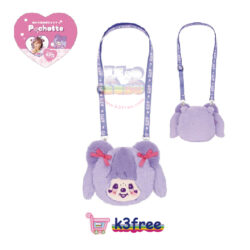
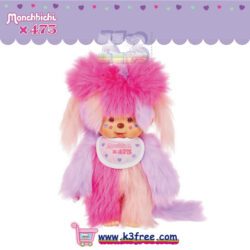
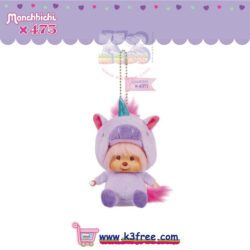
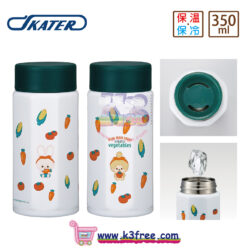
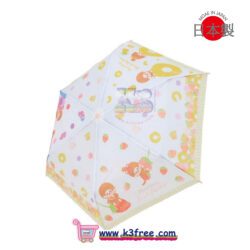
The different clothing styles mentioned above:
Monchhichi’s American Dream
Mattel, Hanna-Barbera and the Rise and Fall of a US Launch
1980: toy giant Mattel takes the US licence.
1983: Hanna-Barbera’s cartoon “Monchhichis” airs on ABC.
The cartoon world: a treetop kingdom called Monchia, guardians of the Happy Works, and a running battle with the villainous Grumplins.
The outcome: one season only, disappointing toy sales, and the line discontinued by Mattel in 1985.
Two models compared: Europe’s organic, collector-led growth against America’s media-led push — which may well have diluted the original charm.
In 1980 the Monchhichi craze finally reached North America, when the toy giant Mattel acquired the licence to manufacture and sell it in the United States. To drive the toy, Mattel commissioned the celebrated animation house Hanna-Barbera to produce a cartoon of the same name.
The series, broadcast on ABC in 1983, built an entirely new world around Monchhichi. It was set in a treetop kingdom called Monchia, home to a peaceable tribe of Monchhichis whose chief duty was to guard the Happy Works, the source of all happy energy, against the purple Grumplins, whose only ambition was to spread misery. Among the leading characters were Moncho, Kyla and the inventor Patchitt. Complete with its jingle — “Monchhichis, Monchhichis, oh so soft and cuddly!” — the cartoon became the engine of the entire toy campaign.
Yet for all that promotional firepower, Monchhichi’s American progress stood in stark contrast to its European story. The cartoon lasted a single season; toy sales fell short of expectations; and in 1985 Mattel discontinued the line.
The American failure is revealing about two very different approaches to building a brand. In Europe, Monchhichi’s success looked like organic growth driven by the product itself. Consumers were drawn to the design and its emotional core, and a deep collecting culture formed of its own accord. In America the push was classically top-down and media-led. The Hanna-Barbera cartoon handed Monchhichi an elaborate epic of magic and good against evil, a world away from the simple, warm, deliberately open-ended philosophy that had made the original so easy to project feelings onto. In trying to force Monchhichi into the action-cartoon mould of The Smurfs or Care Bears, so popular in 1980s America, the strategy may well have thinned out the very quiet charm that made it distinctive. Europe’s enduring success suggests the obvious lesson: when people can pour their own stories and feelings into a character, the bond they form with the brand runs deeper and lasts far longer.